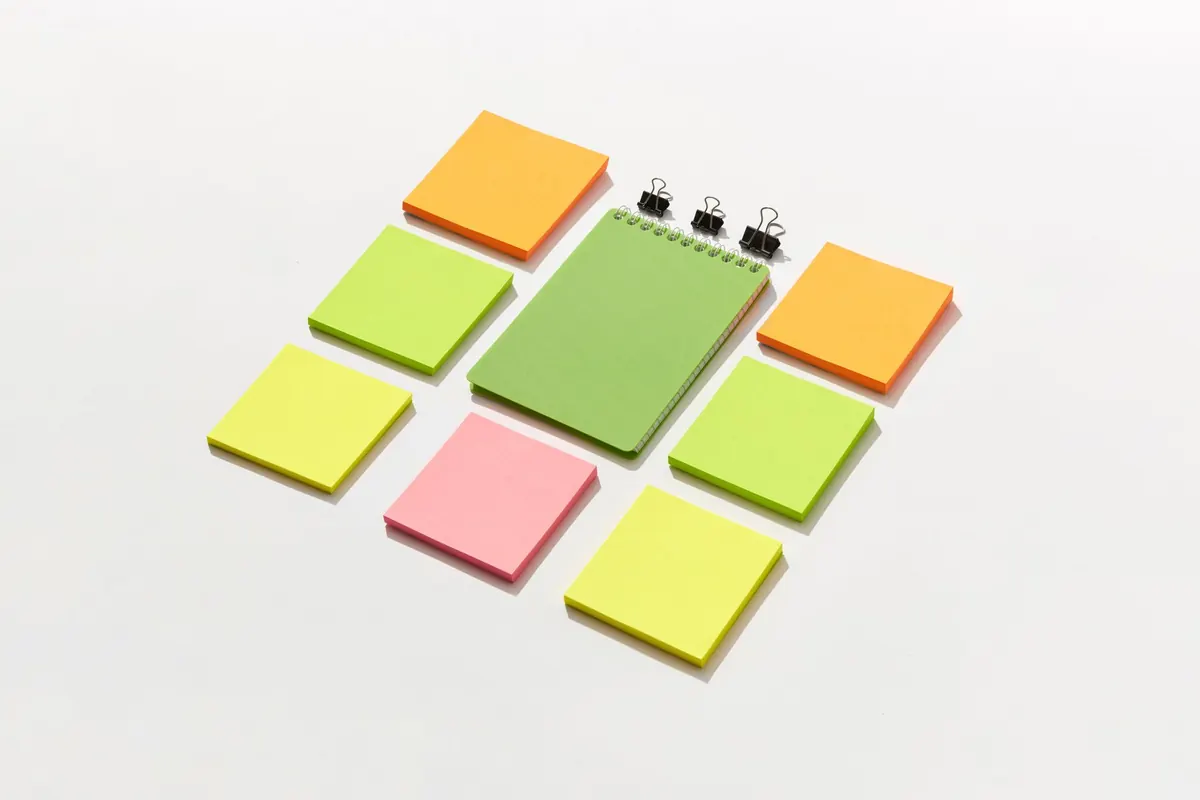
A week rarely arrives as a tidy story. It comes as a grocery receipt with a line scribbled on the back, a sentence copied into your phone at midnight, a voice memo recorded in the car, and three words in a margin. By Friday, those fragments can feel like clutter. They are not. They are the raw material of a weekly journal entry, and the work is mostly collection, selection, and a little shaping. Set aside half an hour, gather the scraps, and follow a simple sequence. You do not need a perfect memory or a beautiful notebook. You need one place to put the pieces and a willingness to see what they add up to.
Pick a single container for the week: a document, a notebook spread, or a folder on your desk. For seven days, put every fragment there without deciding whether it matters. The goal is capture, not curation. If your notes already live in five different places, spend ten minutes copying or moving them into the container. Do not edit yet. Typos are evidence of mood. A rushed phrase can tell you more about Tuesday than a polished sentence written on Sunday.
What counts as a note? More than you think:
Keep the original wording. If a note says “tired, but not sleepy,” leave it alone. That distinction may be the entry’s first real sentence.
Once the pile is in front of you, resist the urge to make categories like Work, Family, Health, and Reading. Early categories flatten the week. They sort information before you have noticed what it means. Instead, sort by temperature.
Make three loose piles. Hot notes still carry a charge: embarrassment, relief, anger, delight, a pinched feeling you cannot name. Warm notes point to a task, a decision, or a conversation you need to have. Cold notes are facts, references, and saved links you want to keep but do not need to write about now. A note that says “call the dentist” is warm. A note that says “I felt invisible at lunch” is hot. A saved recipe is cold.
This sorting is not permanent. It is a way to find the notes that are still alive. If a note makes you sigh, wince, or smile, put it in the hot pile. Those reactions are better guides than neat labels.
Read the hot pile twice. Look for repetition, not a theme. A theme is something you impose; a center of gravity is something the notes keep leaning toward. Ask three questions:
What did I mention more than once? Which note still carries a physical charge? What question kept returning in different clothes?
Then write one sentence that begins, “This week was about…” and finish it plainly. It might be “This week was about how often I said I was tired.” It might be “This week was about a conversation I kept rehearsing but never had.” It might be “This week was about small repairs.” The sentence does not need to be profound. It needs to be honest enough to guide the entry.
If no center appears, use a scene instead. Choose the moment you remember most clearly and let the entry circle it. A center of gravity is not a moral. It is the thing the writing keeps leaning toward.
A weekly entry can be built in five short layers. You do not need every layer every week, but the order helps when the page feels blank.
An entry does not have to conclude anything. It only has to leave a mark you can find again.
The cold notes are not junk, and they are not the entry. They are an archive. Spend three minutes moving them somewhere you can find them later: a running list at the bottom of the document, a labelled page at the back of the notebook, or a folder called “Keep.” Give each one a date and two words of context. “Oct 3 — library quote.” “Oct 6 — recipe from M.”
This small habit pays off later. When you need an example for an essay, a fact for a conversation, or a line that captures a season, the material is already there. It also keeps the entry itself clean. The cold pile stays out of the paragraph, where it would otherwise bloat the writing with details that do not belong.
The hardest part of a weekly entry is not the writing. It is the appointment. Choose a fixed window — Friday afternoon, Sunday morning, the twenty minutes before bed on Thursday — and treat it as non-negotiable but small. Thirty minutes is generous. Fifteen will do if the notes have been collected all week.
Two rules make the ritual easier to keep. First, do not judge the week. A thin entry about a thin week is still accurate, and accuracy is worth more than drama. Second, do not let the entry grow into a report. You are not filing minutes. You are looking at your own week from one step back and saying what you see. If you miss a week, do not start over. Add last week’s scraps to this week’s pile and keep going. The habit survives on continuity, not perfection.
By the time you finish, the grocery receipt will be in the recycling, the voice memo will be transcribed or deleted, and the three words in the margin will have found a home in a sentence. That is the whole point: not to make the week neat, but to make it legible. Do it once and you will have a page. Do it for a month and you will have a record of what you actually noticed, written in your own words, while they were still warm.
Photo: DS stories / Pexels

Paper journals win on focus and feel; digital journals win on search and backup. Here is how to choose, or combine...

A commonplace book gathers quotes, ideas, and references into one place, organised by subject rather than by date....
A shorter, later-in-the-day version of morning pages for people whose brains do not come online at dawn — ten...

A free notebook for thoughts and ideas.
