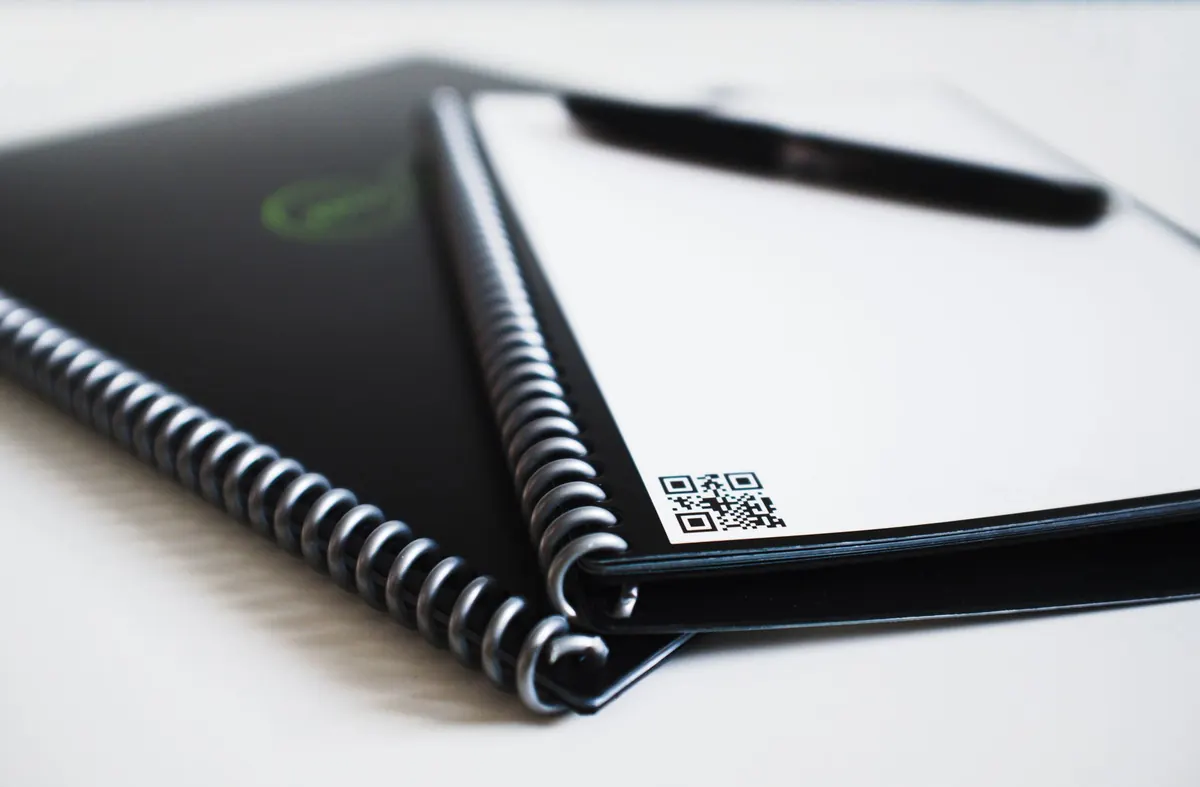
A dotted notebook, a pen, and about nine days of good intentions: that's how most journaling attempts begin. Then the pages start to disagree. One part of you wants a clean monthly spread with a habit tracker and a list of calls to return; another part wants six messy lines about a bad Tuesday and no rules about where they go.
Both impulses are legitimate, and they lead to different practices. Bullet journaling is a system — light, but real. Freeform journaling is an empty page and no instructions. Neither is the more serious choice. They simply ask your brain to do different work, and one of them will fit yours with noticeably less friction.
Strip away the photographed spreads and bullet journaling is a capture system built on one idea: write it down fast, in a form you can find again. Tasks get a dot, finished tasks get an X, events get a circle, notes get a dash. The monthly log holds the shape of the month. The daily log collects whatever arrives. Anything that doesn't belong to a single day — a reading list, a project, a set of measurements — becomes a collection with its own page and an entry in the index.
That last part matters more than the lettering. An index turns a notebook into something searchable: if you wrote about the kitchen renovation in March and again in July, the index says so, and you stop flipping through pages in the dark.
A working bullet journal is allowed to look like a receipt.
The cost is maintenance. Most bullet journal attempts die from the same cause: the system becomes a craft project. You spend forty minutes ruling a weekly spread, feel briefly satisfied, and then stop opening the notebook because it's too pretty to spoil.
Freeform journaling has no method to learn. You date the page and write — whatever arrives, in the order it arrives. Some people fill three longhand pages before anything else in the morning; some write one page at the end of the day; some write letters they never intend to send.
What this format does well is follow a thought. When the problem isn't a list of tasks but a knot — a decision you keep circling, a conversation you're still arguing with in your head — a structured log can't hold it. A blank page can. You start on one subject, drift to another, and land somewhere you didn't plan to go.
What it does badly is retrieval and continuity. Six weeks of undated, untitled pages become an undifferentiated block. And the blank page is a real obstacle: on a tired evening, "write whatever you feel" is a harder instruction than "three bullets."
Forget personality types. Watch what your mind does when you're not directing it.
If your mental background noise is a list of things you must not forget — the form, the call, the birthday — a bullet journal will earn its place faster than any amount of prose. Keep the daily log ugly, close the browser tab with the spreads, and write while the thought is still fresh. "Send the invoice" doesn't need a hand-drawn banner.
Some minds circle. You return to the same worry ten times a day, each time with a slightly better phrasing. That's a freeform signature: write the loop down until it stops repeating. Set a timer for fifteen minutes so the writing has a boundary. Open-ended processing can slide into rumination, and a cheap kitchen timer guards against it.
If your notes come out as three words, a rough diagram, and a song title, forcing them into sentences wastes effort. Use the notebook as a scrapbook of fragments: a page per week instead of a daily spread, plus a freeform corner for whatever doesn't fit a bullet. Plenty of designers and tradespeople work this way without ever calling it a method.
Then freeform is your default and structure should stay thin: date each page, keep a rough index at the back, stop there. Add one list at the front for open tasks so the notebook isn't also pretending to be a project manager.
Don't decide from an article. Run a short experiment with two cheap notebooks and one rule: neither has to look good.
The two practices mix well, and the version that survives is unglamorous. Bullet journal in the front of the notebook, a freeform section in the back, separated by a tab or a fat marker line. Or a single daily entry with two zones: five bullets at the top, open writing underneath. Or a monthly log used as an index pointing to longer freeform pages — which handles both retrieval and reflection without doubling the work.
What rarely works is running a full system and a full freeform practice at the same time. Two daily rituals competing for the same ten minutes will end with neither surviving past the third week.
A journaling habit holds if the format is the one you'd still open on a bad day — the evening you're tired, uninspired, and behind on everything. A bullet journal passes that test when writing one line and three dots feels acceptable. Freeform passes when you can write badly for five minutes and close the cover without judging the page.
Choose by that measure, not by which spreads you admire. Then lower the bar until the habit is boring, and let the pages get messy. Structure is there to hold your attention, not to test it.
Photo: Giang Cao / Pexels

Paper journals win on focus and feel; digital journals win on search and backup. Here is how to choose, or combine...

A commonplace book gathers quotes, ideas, and references into one place, organised by subject rather than by date....

A shorter, later-in-the-day version of morning pages for people whose brains do not come online at dawn — ten...

A free notebook for thoughts and ideas.
